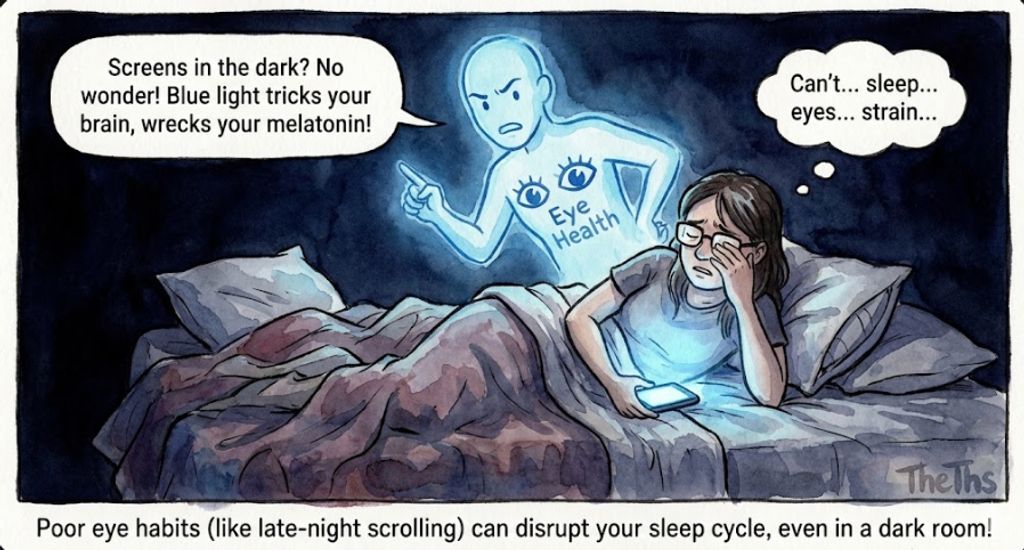
How Eye Health Shapes Your Quality of Sleep
In today’s screen-heavy lifestyle, sleep issues have quietly become one of India’s most common health complaints. While we often blame stress, long work hours, or irregular routines, a lesser-known factor plays a surprisingly important role—your eye health.
The eyes don’t just help you see; they help regulate your body’s internal clock. When the eyes are strained or unhealthy, your sleep cycle can get disturbed, affecting your energy, focus, and overall wellbeing.
Here’s a closer look at how eye health influences sleep—and how Indians can protect both.
The Eye–Sleep Connection: What Most People Don’t Realise
Your eyes contain special cells that detect light and signal the brain to stay awake or wind down. When these cells don’t work well—due to dryness, excessive screen exposure, or eye conditions—the sleep cycle (circadian rhythm) can fall out of sync.
1. Blue Light Exposure Is Highest in India’s Digital Population
With smartphones being the primary device for entertainment and work, Indians are among the largest mobile-screen users globally. Prolonged blue-light exposure can:
Delay melatonin release
Make it harder to fall asleep
Lead to digital eye strain
Common symptoms: headache, dry eyes, blurred vision, irritability before sleep.
You can find Ophthalmologists on TheThs.com who can guide you on safe screen practices.
2. Dry Eyes Can Disrupt Restful Sleep
Dry eyes are increasingly common in India due to AC usage, pollution, long commutes, and dusty workplaces. When the eyes remain irritated or itchy, falling asleep becomes difficult and sleep quality drops.
Many hospitals and clinics listed on TheThs.com offer specialised dry-eye evaluation and treatment.
3. Sleep Apnea Has Visible Eye Symptoms
Though often ignored, sleep apnea can show up first in the eyes. Conditions like:
Floppy eyelid syndrome
Glaucoma
Vision fluctuations
may appear in people with untreated sleep apnea. Night-time breathing issues and eye health are deeply linked.
If you suspect this, you can consult Internal Medicine specialists or Eye Care experts via TheThs.com.
4. Eye Conditions That Affect Sleep
Several eye diseases influence your sleep cycle, such as:
Glaucoma
Optic nerve disorders
Cataract (especially with glare issues)
Uveitis (pain makes it hard to rest)
Chronic discomfort or reduced light perception can confuse the brain and disrupt sleep rhythms.
5. Migraine and Eye Strain Trigger Night-Time Disturbances
For many Indians, migraines triggered by screen exposure, bright lights, or eye strain can lead to:
Difficulty falling asleep
Restlessness
Increased night awakenings
Eye-related migraines are often overlooked but easily diagnosable with the help of a specialist.
TheThs.com makes it simple to connect with Neurologists, Ophthalmologists, and Eye Clinics across India.
How to Protect Your Eyes—and Improve Sleep Naturally
Follow the 20-20-20 rule
Every 20 minutes, look 20 feet away for 20 seconds.
Limit screens 1–2 hours before bedtime
Reduces blue-light exposure and eye strain.
Use proper indoor lighting
Harsh LED lights can over-stimulate the eyes at night.
Blink often and stay hydrated
Prevents dryness and irritation.
Get regular eye check-ups
Especially if you work long hours on digital devices.
You can find eye specialists, hospitals, and diagnostic centres for routine eye exams on TheThs.com.
When Should You See an Eye Specialist?
Seek help if you notice:
Constant tired eyes
Frequent headaches
Burning or gritty sensation
Difficulty adjusting to light at night
Sleep disruptions without clear cause
These symptoms may indicate underlying eye issues that are affecting your sleep.
TheThs.com: Helping You Take Charge of Eye & Sleep Health
Whether you need an Ophthalmologist, Internal Medicine expert, or Sleep-related consultation, TheThs platform simplifies the process of finding verified doctors, clinics, and hospitals across India.
Better eye care can lead to better sleep—and better overall health.