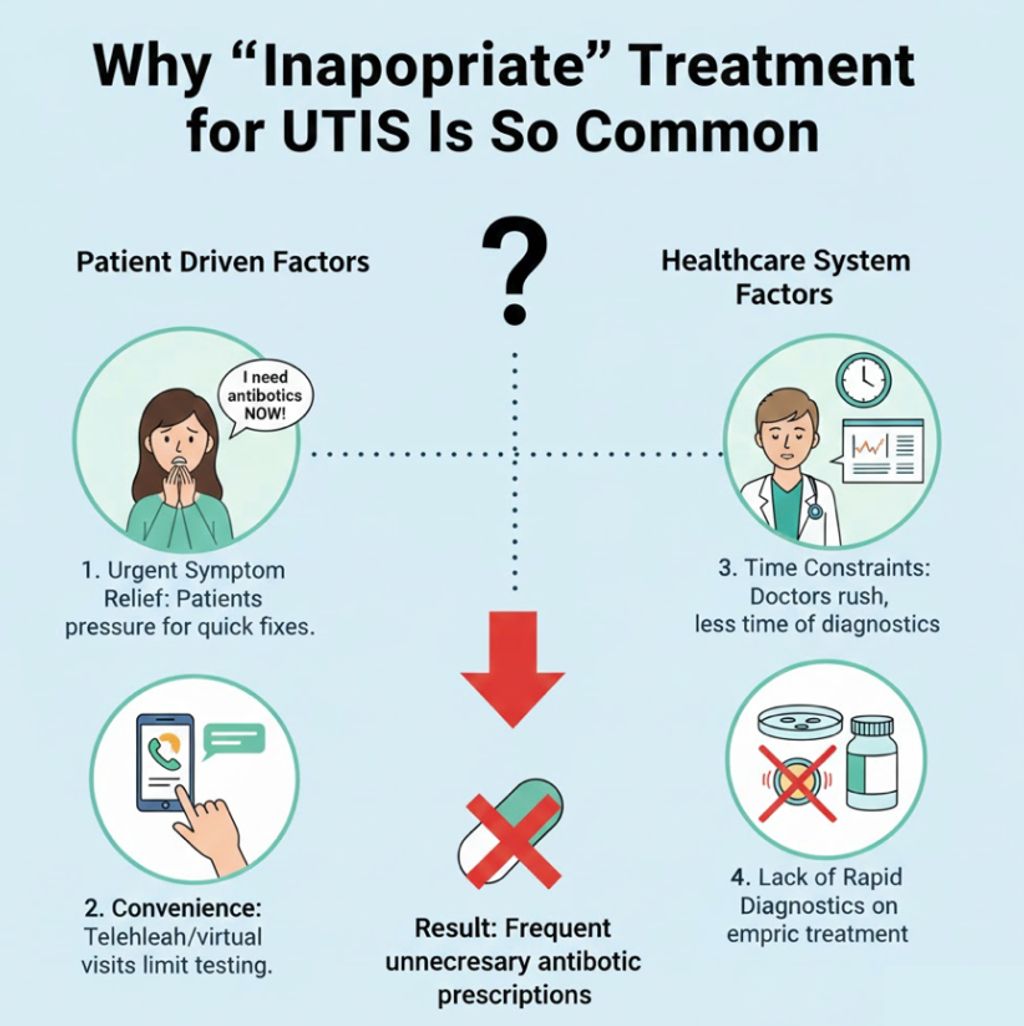
Why Incorrect Treatment for Urinary Tract Infections Is So Widespread
Urinary tract infections (UTIs) are among the most common reasons people seek medical care in India. Despite being well-understood and usually treatable, many patients continue to receive inappropriate or incomplete treatment. This often leads to recurring infections, antibiotic resistance, and unnecessary discomfort.
Understanding why this happens is the first step toward better care and faster recovery.
What Makes UTIs Easy to Mismanage?
UTIs can present with familiar symptoms — burning during urination, frequent urges to urinate, lower abdominal discomfort, or cloudy urine. Because these signs are widely recognised, many people assume they can manage the condition on their own.
Unfortunately, this assumption is one of the main reasons UTIs are often treated incorrectly.
Common Reasons for Inappropriate UTI Treatment
1. Self-Medication Without Testing
Many people start antibiotics without urine testing, often based on past experience or advice from non-medical sources. Not all urinary symptoms are caused by bacterial infections, and not all bacteria respond to the same medications.
Without proper testing, treatment may:
Fail to eliminate the infection
Mask symptoms temporarily
Increase antibiotic resistance
2. Incomplete Antibiotic Courses
Stopping medication once symptoms improve is another major issue. While discomfort may reduce quickly, bacteria can still be present.
Incomplete treatment often leads to:
Recurrent UTIs
More severe infections
Hard-to-treat resistant bacteria
3. Confusing UTIs With Other Conditions
Symptoms of UTIs can overlap with:
Vaginal infections
Sexually transmitted infections
Kidney stones
Prostate conditions in men
Treating the wrong condition with antibiotics delays correct diagnosis and proper care.
4. Overuse of Broad-Spectrum Antibiotics
Using powerful antibiotics when they are not needed can disrupt the body’s natural bacteria and make future infections harder to treat. Targeted therapy based on urine culture results is far more effective.
Why UTIs Are More Complicated Than They Appear
While some UTIs are simple, others are more complex and require specialised care. Factors that increase complication risk include:
Diabetes
Pregnancy
Recurrent infections
Kidney involvement
Enlarged prostate in men
In such cases, treatment should be guided by Urologists, Gynecologists, or Internal Medicine specialists.
Medical Specialists Involved in UTI Care
Depending on the patient and symptoms, UTI management may involve:
Urology – recurrent UTIs, kidney infections, male urinary issues
Gynecology – UTIs during pregnancy or alongside vaginal symptoms
Internal Medicine – complex or chronic infections
Nephrology – kidney-related complications
Finding the right specialist early reduces the risk of repeat infections.
How Delayed or Incorrect Treatment Affects Long-Term Health
Improper UTI treatment can lead to:
Frequent recurrence
Kidney damage
Increased healthcare costs
Antibiotic resistance
Reduced quality of life
In severe cases, untreated infections can spread beyond the urinary system, becoming serious medical emergencies.
The Role of Accurate Diagnosis
Proper UTI care begins with:
Urine routine examination
Urine culture and sensitivity tests
Clinical evaluation by a qualified doctor
These steps ensure that the correct medication is chosen and taken for the appropriate duration.
How TheThs Helps You Get the Right UTI Care
Navigating UTI symptoms doesn’t have to involve guesswork. TheThs.com helps users:
Find experienced Urologists, Gynecologists, and Physicians
Locate hospitals and clinics offering urine testing
Book consultations quickly
Access follow-up care for recurrent infections
This streamlined approach reduces delays and improves treatment outcomes.
Preventing Recurrent UTIs
While medical treatment is essential, preventive measures also play an important role:
Adequate hydration
Proper hygiene
Timely medical consultation
Avoiding unnecessary antibiotics
Doctors available through TheThs can guide patients on prevention strategies tailored to individual health needs.
Conclusion
Inappropriate treatment for UTIs remains common because symptoms are often underestimated and medical evaluation is delayed. However, UTIs are not conditions to manage casually.
Accurate diagnosis, targeted treatment, and timely specialist care make all the difference. With TheThs.com, patients can connect with the right doctors, hospitals, and clinics — ensuring effective treatment and long-term urinary health.