Why Millennials Should Pay Attention to Their Heart Health
In today’s fast-paced world, millennials—many juggling demanding careers, digital overload and growing financial responsibilities—are often focused on what’s urgent. But one long-term risk that they might be underestimating is heart disease. Here’s why heart health matters for this generation, and what steps they can take to protect themselves.
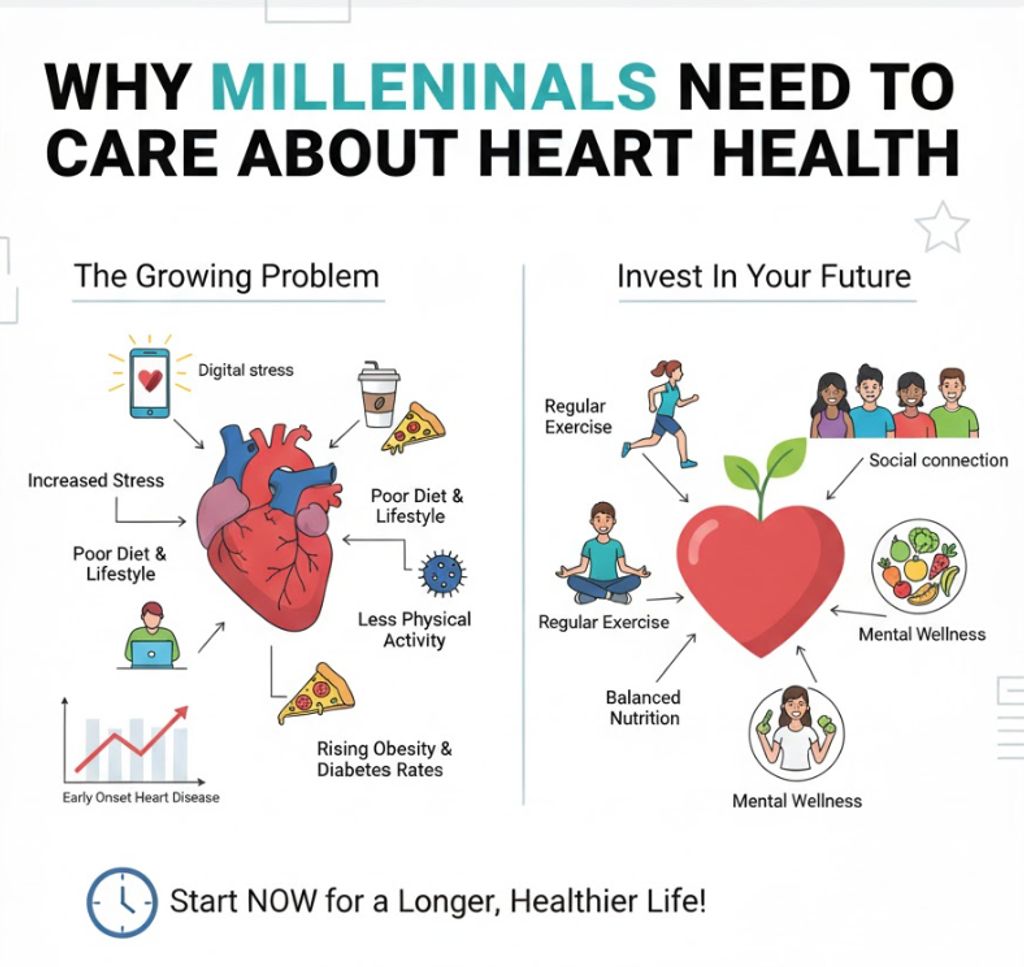
The Hidden Heart Risks Facing Millennials
1. Rising Stress Levels
Chronic stress is more than just a mental burden — it has serious physical consequences. For millennials, high-pressure work environments, tight deadlines, financial uncertainty, and constant connectivity all contribute to prolonged stress. Over time, this persistent stress can lead to elevated blood pressure, inflammation in blood vessels, and other risk factors for heart disease.
2. Sedentary Lifestyle
Many millennials work desk jobs and spend a large portion of their time on screens, both at work and in personal life. This high screen time, coupled with low levels of physical activity, increases the likelihood of unhealthy weight gain, high cholesterol, and hypertension — all of which elevate heart risk.
3. Poor Lifestyle Habits
Fast food, processed meals, erratic sleep patterns and even substance use are more common among younger adults. These habits contribute to obesity, high blood pressure, and metabolic problems — early signs that the heart may be under strain.
4. Mental Health Connection
Depression, anxiety, and other mental health challenges are not just psychological — they also correlate with heart-health risks. Research shows that anxiety and depression in younger adults correlate with poorer cardiovascular health, including issues like higher blood pressure and cholesterol.
5. Early Markers of Heart Disease
What used to be considered “old age problems” are appearing earlier. Among millennials, there is a growing prevalence of high cholesterol, hypertension, and elevated BMI — all dangerous early indicators of cardiovascular disease.
In fact, data suggests that millennials in corporate environments show a sharp rise in heart-risk factors.
Moreover, having ideal heart-health metrics in one’s 20s or 30s has been linked to a significantly lower risk of cardiovascular disease later in life.
Why It’s Critical to Act Now
Prevention Is More Effective Than Cure: Adopting heart-healthy habits early can help prevent serious problems decades later.
Long-Term Health & Productivity: Good heart health supports stamina, resilience, and better quality of life — in both personal and professional spheres.
Rising Trend Among Young Indians: In India specifically, younger professionals are showing higher rates of blood pressure and cholesterol abnormalities, making this more than just a global concern — it’s very local.
Mental & Physical Well-Being Are Linked: Taking care of your mental health isn’t just about feeling good — it’s part of maintaining a healthy heart.
What Millennials Can Do to Protect Their Hearts
Here are practical strategies to reduce heart-disease risk:
Manage Stress: Practice mindfulness, meditation, or breathing exercises. Take regular breaks, and don’t overwork yourself.
Stay Active: Incorporate movement into your daily life — take walks, opt for the stairs, or follow a workout routine.
Choose Heart-Friendly Diet: Focus on whole foods — fruits, vegetables, lean proteins, whole grains. Limit processed and high-sugar foods.
Prioritise Sleep: Aim for regular, restful sleep. Poor sleep affects blood pressure, inflammation, and stress response.
Get Regular Health Checkups: Monitor blood pressure, cholesterol, and blood sugar regularly — early detection is key.
Look After Mental Health: If you’re feeling persistent anxiety or depression, seek help. Therapy, counselling or peer support can make a big difference.
The Take-Home Message
Heart disease isn’t just a concern for older generations — millennials need to take it seriously too. With increasing stress, sedentary lifestyles, and modern work culture, younger adults are seeing heart-risk factors rise earlier than ever. But the good news is that many of these risks can be managed or reversed if addressed proactively. Building healthy habits now isn’t just about the future — it’s about safeguarding your present and long-term well-being.