When Emotions Hurt: Understanding How a Broken Heart Can Affect Your Health
We often talk about a “broken heart” as a poetic expression of emotional pain. But in reality, intense sadness, stress, or emotional shock can genuinely affect the body. Many people are surprised to learn that extreme emotional distress can trigger physical symptoms — sometimes serious ones. This article explores how a broken heart can impact your health and what you can do to protect your emotional and physical well-being.
What Is “Broken Heart Syndrome”?
“Broken Heart Syndrome” is a real, medically recognised condition where a person experiences sudden, intense chest pain after a stressful or emotional event. It can occur after experiences like heartbreak, loss of a loved one, bad news, or extreme fear.
In this condition, the heart temporarily weakens, leading to symptoms that resemble a heart attack. The good news is that most people recover with proper care and support.
What Can Trigger It?
A broken heart isn’t caused only by romantic relationships. Other triggers may include:
Sudden emotional shock
Receiving devastating news
The loss of a family member
Financial stress
Major arguments
Intense anxiety or fear
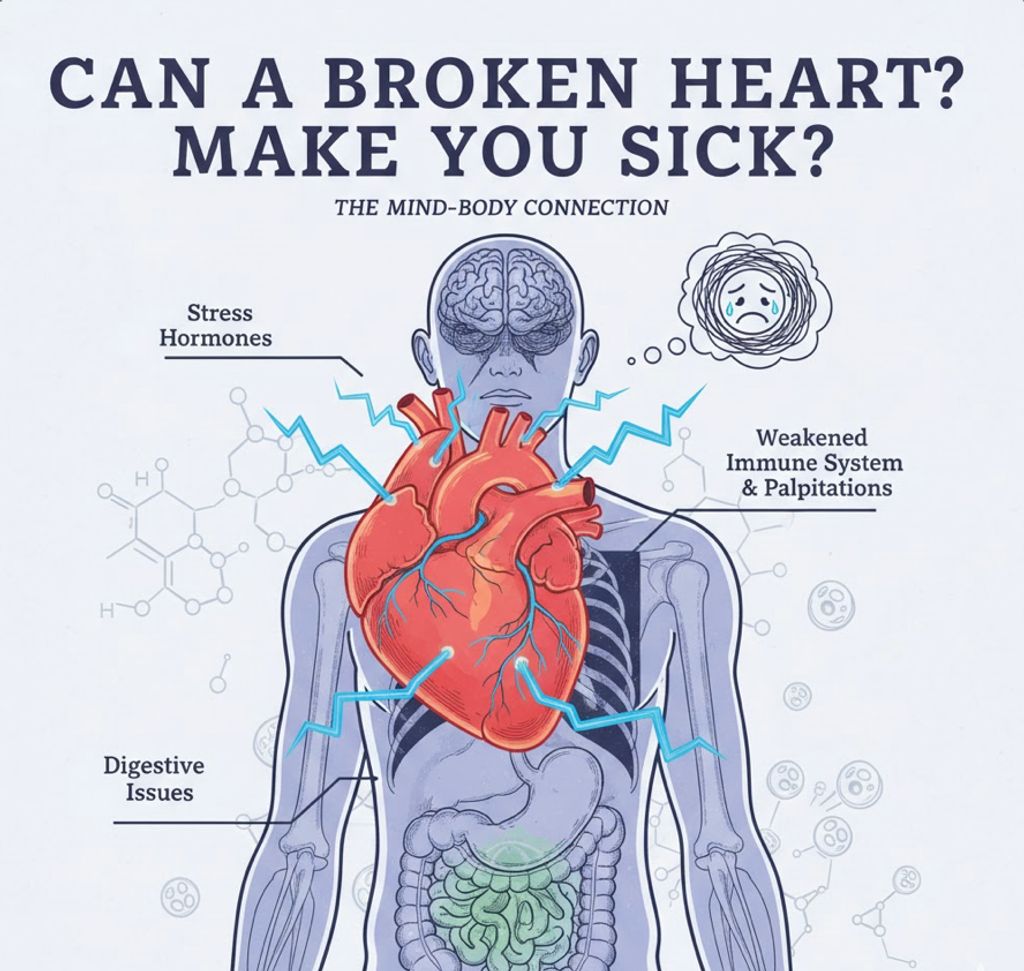
When the body feels overwhelmed, it releases stress hormones. In excess, these hormones can temporarily affect heart function.
Symptoms You Should Be Aware Of
The physical symptoms can feel alarming because they often mimic a heart attack:
Sudden chest pain
Shortness of breath
Irregular heartbeat
Feeling faint or dizzy
Sweating
Extreme fatigue
If someone experiences these symptoms — especially after emotional stress — they should not ignore them. Immediate medical evaluation is important.
Why Stress Affects the Heart
When you experience emotional distress, the body surges with stress hormones such as adrenaline. These hormones can:
Tighten blood vessels
Increase heart rate
Affect the heart's pumping ability
While the condition is usually temporary, it is a reminder that emotional well-being is deeply connected to physical health.
How to Protect Your Heart During Emotional Stress
Here are steps to help manage emotional strain and support your heart:
1. Recognise Your Emotions
Acknowledge feelings of sadness, anxiety, or pain instead of suppressing them.
2. Talk to Someone You Trust
Sharing your emotions with a friend, family member, or counsellor helps reduce stress.
3. Practice Mind–Body Activities
Activities like yoga, meditation, deep breathing, or regular walks help calm the nervous system.
4. Maintain a Healthy Routine
Adequate sleep, hydration, and balanced meals keep the body resilient during emotional hardships.
5. Avoid Overworking or Overthinking
Give your mind time to rest and create space for healing.
6. Seek Professional Support if Needed
If emotional distress persists or affects daily life, talking to a mental health professional can be extremely beneficial.
When Should You Seek Medical Help?
Get medical attention immediately if you or someone else experiences:
Severe chest pain
Difficulty breathing
Fainting spells
Persistent heart palpitations
It’s important to rule out any serious heart-related conditions.
Healing Takes Time — And That’s Okay
A broken heart can be deeply painful, but emotional wounds do heal. Understanding the mind–body connection helps you manage stress better and protect your health. Give yourself time, support, and care — both emotionally and physically.
If you need more health-related guides and resources, visit www.theths.com.