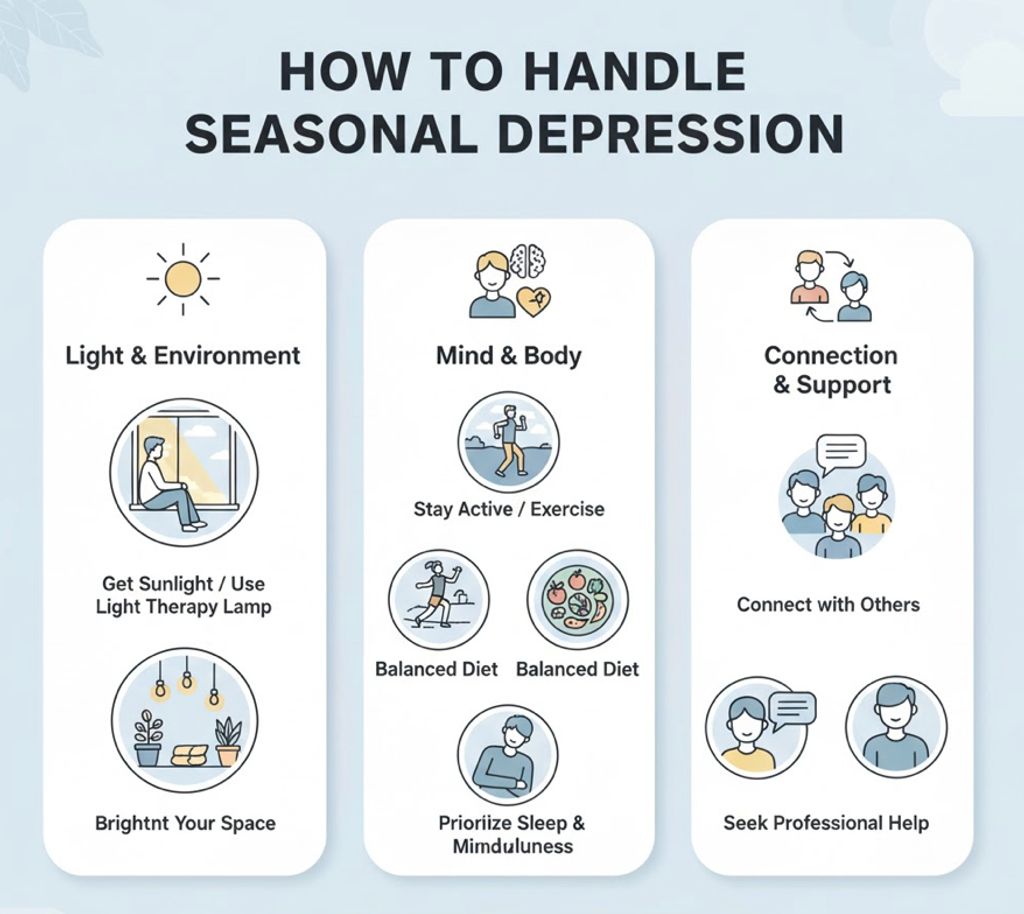
How to Handle Seasonal Depression This Winter
As the days grow shorter and the weather turns colder, it’s common for some people to experience a shift in mood — popularly known as seasonal depression or seasonal affective disorder (SAD). If you’re feeling low, lethargic, or just “off” during this time of year, you’re not alone. Here’s a guide to help you understand what seasonal depression is, why it happens, and how to cope with it effectively.
What Is Seasonal Depression?
Seasonal depression is a type of mood disorder that typically emerges during the fall or winter months when daylight hours decrease. Symptoms can vary in intensity and may involve:
Persistent low mood
Lack of energy or fatigue
Changes in sleep patterns (sleeping more than usual)
Craving for carbohydrates or weight gain
Feelings of hopelessness or irritability
Decreased interest in activities you once enjoyed
Why It Happens
Several factors contribute to seasonal depression:
Reduced Sunlight Exposure
Less daylight disrupts your body’s internal clock (circadian rhythm), affecting how you feel and sleep.
Melatonin and Serotonin Fluctuations
Shorter days can lead to changes in hormone levels — particularly increases in melatonin (which makes you sleepy) and drops in serotonin (which affects mood).
Vitamin D Deficiency
With less sun exposure, many people’s vitamin D levels dip, which may influence mood regulation.
Lifestyle Changes
In colder months, there’s a tendency to stay indoors, exercise less, and socially isolate — all of which can worsen feelings of depression.
Practical Ways to Cope Right Now
Here are some strategies to manage seasonal depression and support your mental well-being:
Get More Light Exposure
Try to spend time outside during daylight hours, even on overcast days. Sit near windows or use a light therapy lamp if natural light is limited.
Maintain a Consistent Routine
Structure your day with regular sleep, meals, and activity to help stabilise your mood.
Stay Physically Active
Exercise is a powerful mood booster. Aim for regular movement — even a short walk or stretching at home can help.
Eat Well
Focus on balanced, nutritious meals. Include foods rich in complex carbohydrates, lean proteins, and healthy fats. Avoid relying solely on carb-heavy comfort food.
Practice Relaxation Techniques
Try mindfulness, deep breathing exercises, meditation, or yoga. These can help reduce stress and improve emotional resilience.
Stay Social
Reach out to friends or family, even if it’s just through a call or video chat. Social connection can counter feelings of isolation.
Consider Light Therapy
Light therapy boxes mimic sunlight and may help reset your internal clock and improve mood in cases of seasonal depression.
Monitor Your Sleep
Aim for regular, adequate sleep. Practice good sleep hygiene — dim lights before bed, avoid screens close to bedtime, and create a cozy sleep environment.
When to Reach Out for Help
If your symptoms are severe or interfere significantly with your daily life, it’s important to seek professional support. You may want to consider:
Speaking to a mental health professional (therapist, psychologist, or counsellor)
Exploring support groups or online therapy options
Consulting a doctor if you suspect there may be underlying physical contributors (e.g., vitamin D deficiency)
How TheThs Can Help
At www.theths.com, you can find reliable information, trusted mental health providers, and resources tailored to support seasonal depression. Use TheThs guided search to explore psychologists, counsellors, and wellness coaches who specialise in mood disorders — and book consultations that suit your needs.