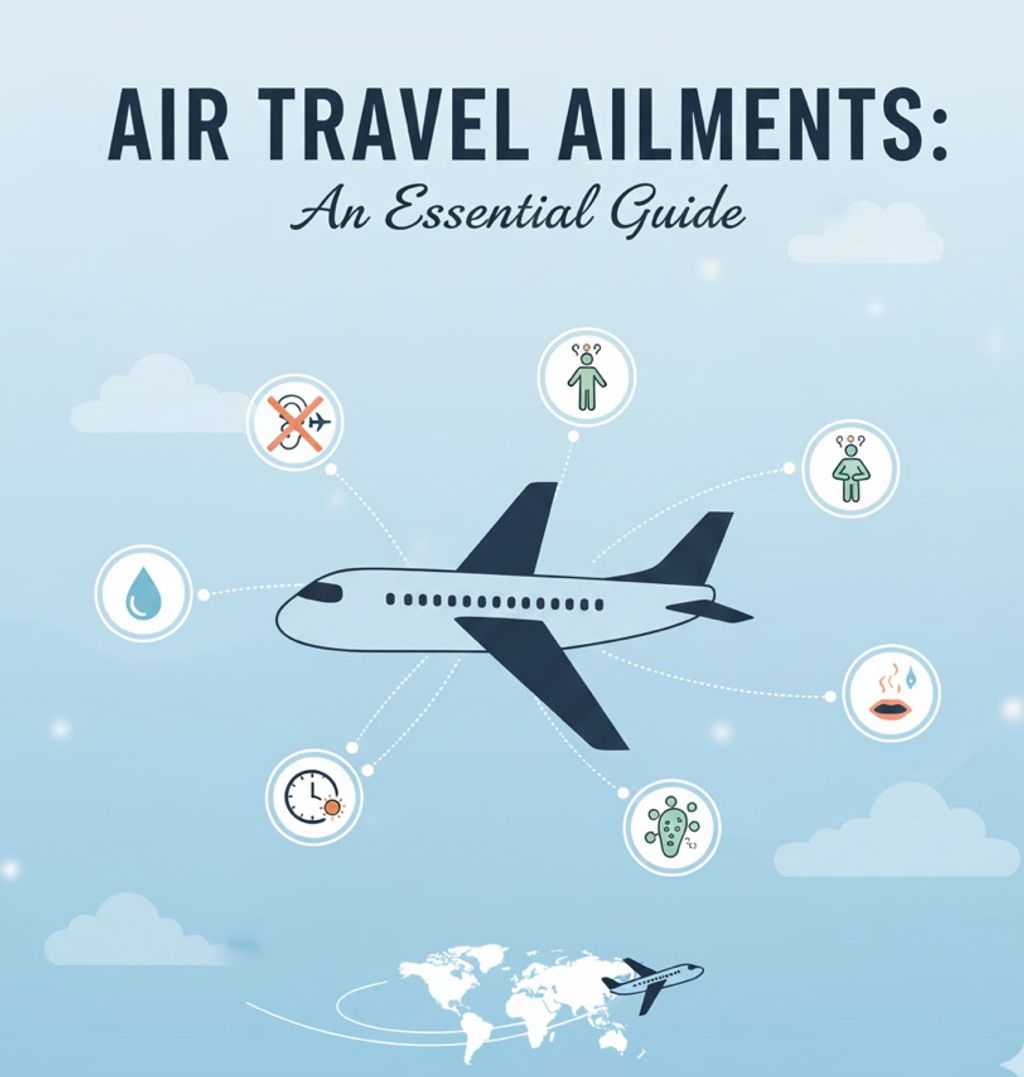
A Complete Guide to Common Air Travel Ailments — And How to Stay Healthy in the Sky
Air travel makes it possible to reach distant cities in hours, but the journey isn’t always as pleasant as the destination. Long flights, cramped spaces, dry cabin air, and pressure changes can take a toll on your body in unexpected ways.
Whether you’re a frequent flyer or preparing for an occasional trip, understanding common air travel ailments can help you stay comfortable and healthy until landing.
Here’s a practical, traveller-friendly guide to what you may experience and how to handle it — especially useful for anyone planning domestic or international travel from India.
Why Flying Affects Your Body
Aircraft cabins are pressurised — but not to sea-level pressure. The air is thinner, drier, and enriched with filtered oxygen. This environment impacts hydration, circulation, sinuses, digestion, and even your mood.
Knowing how your body reacts can help you prepare before takeoff.
Common Air Travel Ailments and How to Manage Them
1. Ear Pain and Pressure Changes
Changes in cabin pressure during takeoff and landing can cause the eardrum to stretch, leading to discomfort or sharp pain.
Common symptoms:
Ear popping
Muffled hearing
Pressure or pain
Dizziness
What helps:
Swallowing, yawning, or chewing gum
Drinking water during ascent and descent
Using filtered earplugs designed for flights
If you have a cold or sinus blockage, ear discomfort can be worse. Steam inhalation before your trip may help clear congestion.
2. Dehydration and Dryness
The air inside the cabin is extremely dry — often drier than a desert. This can leave you dehydrated faster than usual.
You may experience:
Dry skin and lips
Throat irritation
Headaches
Fatigue
Tips to stay hydrated:
Drink water regularly throughout the flight
Avoid too much coffee, tea, or alcohol
Use a gentle moisturiser and lip balm
Carry lubricating eye drops if you have dry eyes
3. Jet Lag and Sleep Disruption
Crossing time zones can confuse your internal clock, affecting your sleep and energy levels.
Symptoms:
Insomnia
Daytime fatigue
Irritability
Difficulty concentrating
How to manage:
Adjust your sleep schedule a few days before long-haul travel
Avoid heavy meals before bedtime
Get sunlight at your destination to reset your body clock
Stay awake until local bedtime if you land during the day
4. Deep Vein Thrombosis (DVT)
Sitting for long periods can slow blood circulation in your legs, increasing the risk of clot formation, especially on long flights.
Who may be at higher risk:
People over 60
Those with a history of clots
Pregnant women
People with obesity
Individuals with certain medical conditions
Preventive measures:
Walk around the cabin every 1–2 hours
Flex and stretch your legs while seated
Wear compression stockings
Keep yourself hydrated
If you have any medical condition, consult a doctor before long-haul flights.
5. Motion Sickness
Some passengers experience nausea due to turbulence or motion sensitivity.
How to reduce discomfort:
Choose a seat over the wings (least turbulence)
Avoid heavy or greasy meals before flying
Keep your eyes on a fixed point
Use prescribed anti-nausea medication if needed
6. Sinus and Nasal Issues
The dry air and pressure changes can irritate your nasal passages and sinus cavities.
Relief strategies:
Use a saline nasal spray
Stay hydrated
Avoid flying if you have a severe sinus infection
7. Post-Flight Swelling and Fatigue
Sitting for extended periods can cause your feet, ankles, and hands to swell.
What helps:
Walking frequently
Elevating your feet when possible
Staying hydrated
Avoiding salty snacks during the flight
8. Skin Breakouts and Irritation
Dry cabin air and changing time zones can contribute to skin irritation.
Quick care tips:
Use a gentle moisturiser
Cleanse your skin properly before and after flying
Avoid heavy makeup during long flights
Staying Healthy Before, During, and After Your Flight
Before Flying
Get adequate sleep
Stay hydrated
Carry essential medications
Eat a light, balanced meal
During the Flight
Move around regularly
Drink water frequently
Maintain good posture
Use hygiene products like sanitiser and wipes
After Landing
Stretch your body
Drink plenty of fluids
Get natural sunlight
Rest when needed
How TheThs Can Help You Travel Healthier
Traveling soon and worried about specific health concerns?
At TheThs, you can easily connect with:
General physicians
ENT specialists
Dermatologists
Travel health experts
Online and in-clinic consultations
Whether you need advice for long flights, medical clearance, motion sickness management, or help with allergies — TheThs gives you a convenient way to get reliable guidance before you take off.
Conclusion
Air travel is safe for most people, but it can cause temporary discomfort if you’re not prepared. With simple precautions and awareness of how flying affects the body, you can make your journey far more comfortable and healthy.
For trusted health information, doctor appointments, and support, visit theths.com.